
2022-23 Folklife Apprenticeship Feature: Mushroom Foraging with Sharon Briggs & Anthony Murray
Written by Emma Goldenthal
This article features one of seven pairs supported by the statewide West Virginia Folklife Apprenticeship program in 2022-2023.
NOW through August 26, 2024, apply for the 2024-2025 program!
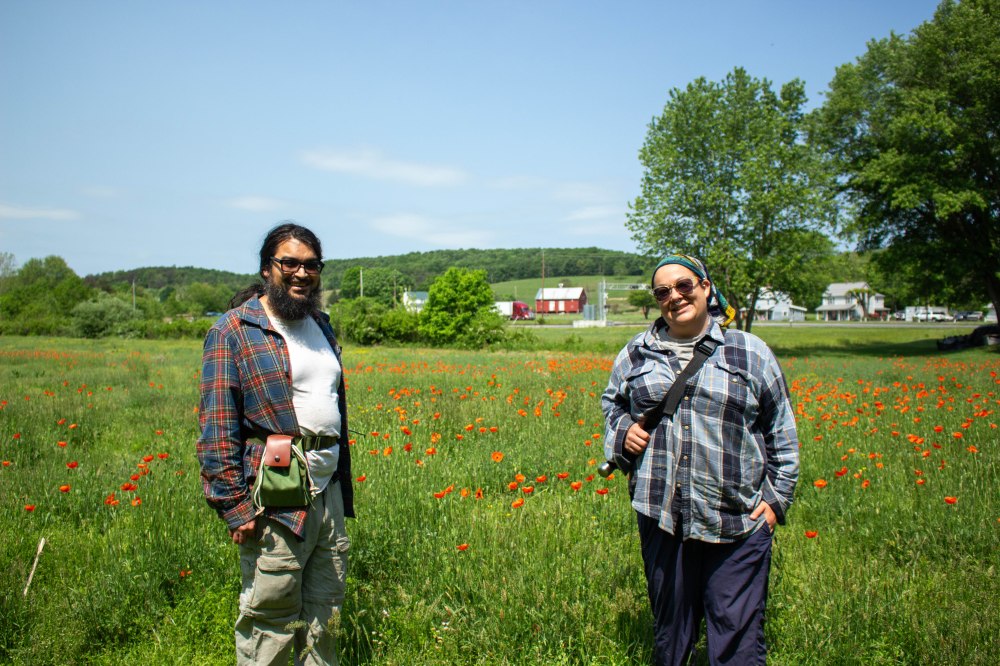
Turkey tail. Lion’s mane. Red reishi. Crown tip coral. These are just a few of the countless mushrooms that Sharon Briggs and her apprentice, Anthony Murray, have found together over more than a decade of friendship and professional collaboration. Whether at the farmer’s market, in the mycology lab, or at Sharon and her wife Lisa’s farm, Peasant’s Parcel, their passion for sharing knowledge about fungi is at the heart of their traditional practice.
Anthony Murray was born in Bogota, Colombia, and he grew up in Alexandria, Virginia. He now resides in Capon Bridge, West Virginia. Anthony says he discovered a love for exploring the trails and forests of his new home, and all the wonders and surprises within them.
It “became a whole thing for me to go into nature and go on trails and go exploring and not necessarily even have a place, a destination, just exploring around,” Anthony recounts. “This is such a new, literally a new world for me, and there’s so much to learn that I feel like I’m learning every day…and we [Sharon and I] have been talking about mushrooms for years!”
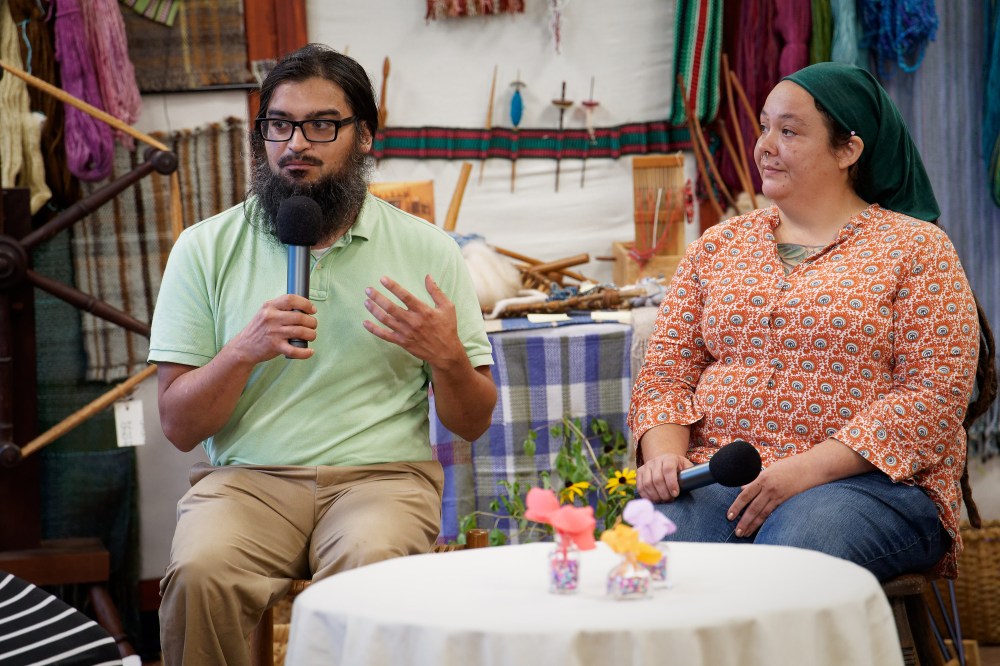
A lifelong West Virginia resident, Sharon Briggs grew up in Capon Bridge, West Virginia, and she now resides in the nearby town of Paw Paw. Here, she and her wife, Lisa, have operated Peasant’s Parcel Mushroom Farm and Mycology Lab since 2019. College sweethearts at Davis & Elkins, their venture was born from a shared passion for the outdoors and their love of mushrooms.
Sharon has been foraging and mapping mushroom locations in the Eastern Panhandle and Potomac Highlands for more than twenty years. She traces her love and curiosity for the natural world all the way back to her childhood.
“Pretty much we grew up without the TV, so you were outdoors all the time,” she recalls. “My mother [was] a homesteader with interest in foraging and herbalism, [and she] always encouraged my curiosity and discovery. She taught me basic identification skills and we spent hours at the library reading every book on native plants and fungi we could access.”
While Sharon’s mother was mostly interested in plant-based medicine and herbalism, Sharon found herself drawn to the fascinating colors of the mushrooms she saw in the woods: “I would bring home any mushroom I could to try to figure it out!”
Though her family ate commonly foraged mushrooms like chicken of the woods, morels, and lion’s mane—which grow throughout Appalachia—Sharon’s interests in fungi went far deeper.
“In college, my love of nature collided with an interest in science, and I learned that mushrooms today are grown with a combination of specific scientific techniques and long practiced natural methods,” Sharon reflects.
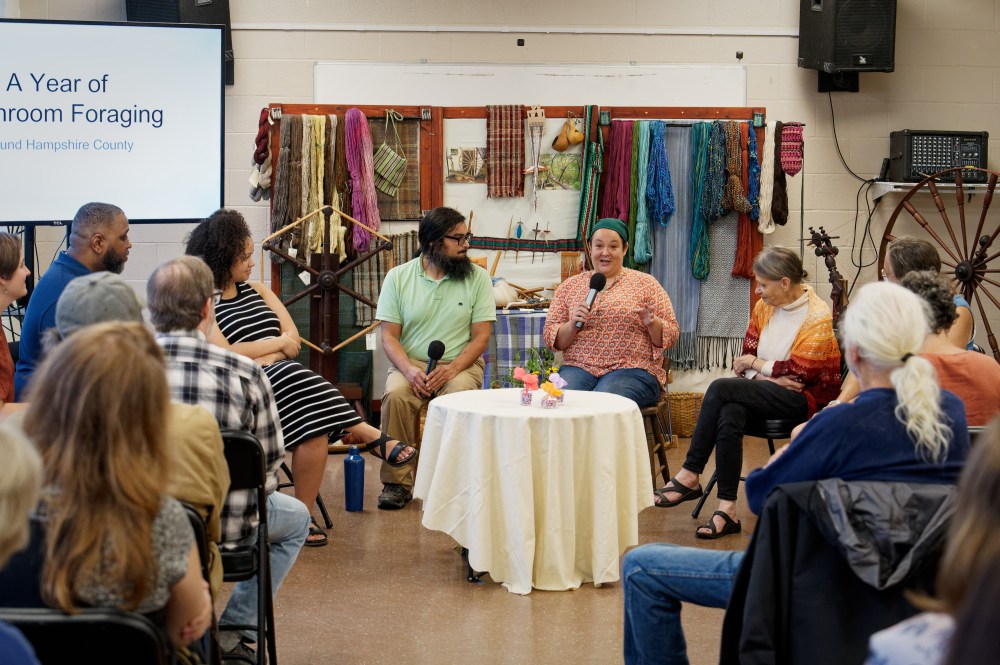
Having apprenticed with accomplished mushroom growers herself, Sharon now continues her mentors’ traditions of teaching by sharing her knowledge with Anthony. Sharon and Anthony first met in 2012 and quickly bonded over their shared interest in the outdoors. Today, Anthony operates an apiary at Peasant’s Parcel, helps Sharon and Lisa with mycological tasks like log inoculation—a technique for growing shiitake and other mushrooms—and supports Sharon at the farmer’s market, where they both love talking to customers about mycology, mushroom cultivation, and foraging.
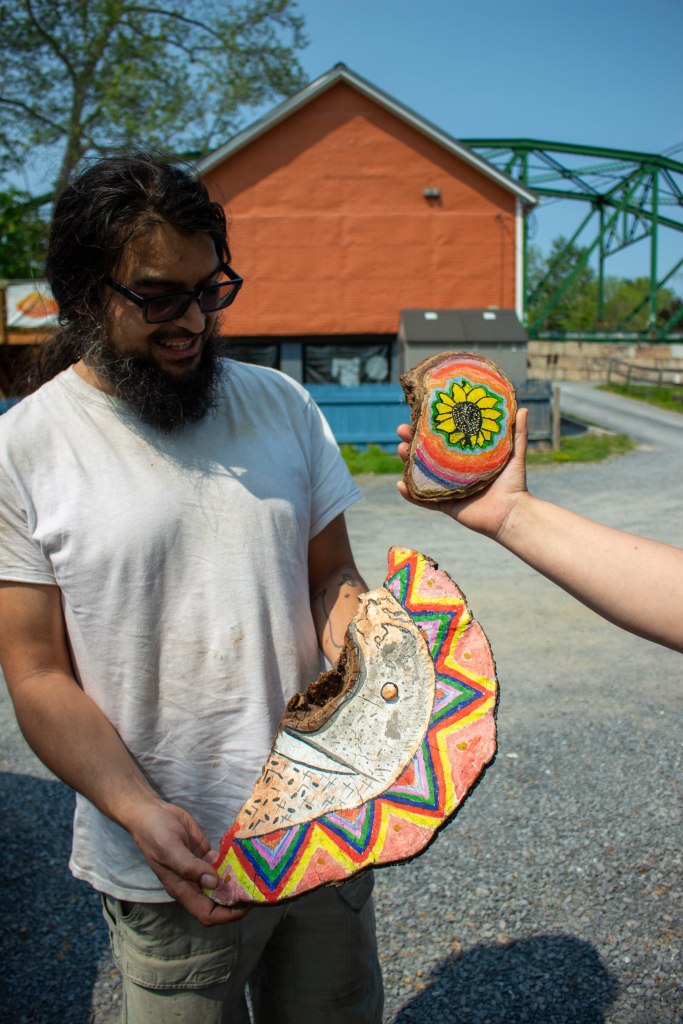
For generations, Indigenous people and settlers have foraged mushrooms in Appalachia. Foraging is not just limited to eating; many foragers also use mushrooms to make dyes, medicine, inks for drawing and writing, and even firestarters. Foraging is a practiced skill, one can only learn by doing.
“A forager must read the landscape, identify micro-climates, know what conditions to seek, and also have a consideration of safety at all times,” Sharon explains. “All of these skills were common in our Appalachian ancestors out of necessity. Today, foraging is a hobby for most and an honored tradition in Appalachia.”
Developing an eye for each specific mushroom and its preferred environment takes time and practice. In general, as Sharon and Anthony know from years of foraging, there are a few factors you can pay attention to: Temperature, moisture, humidity, low-lying versus high-lying elevations, types of trees, and sunlight can all help a forager guess where they’ll be most likely to find a certain type of mushroom. Knowing a mushroom’s season also helps, though as Sharon notes, fruiting fungi often evade predictability:
“Chicken of the woods is technically June through October, but I’ve found them almost all year round.”
A mushroom’s visual appearance, with markers such as gills or teeth, and the practice of making “spore prints” can help distinguish tricky lookalikes.
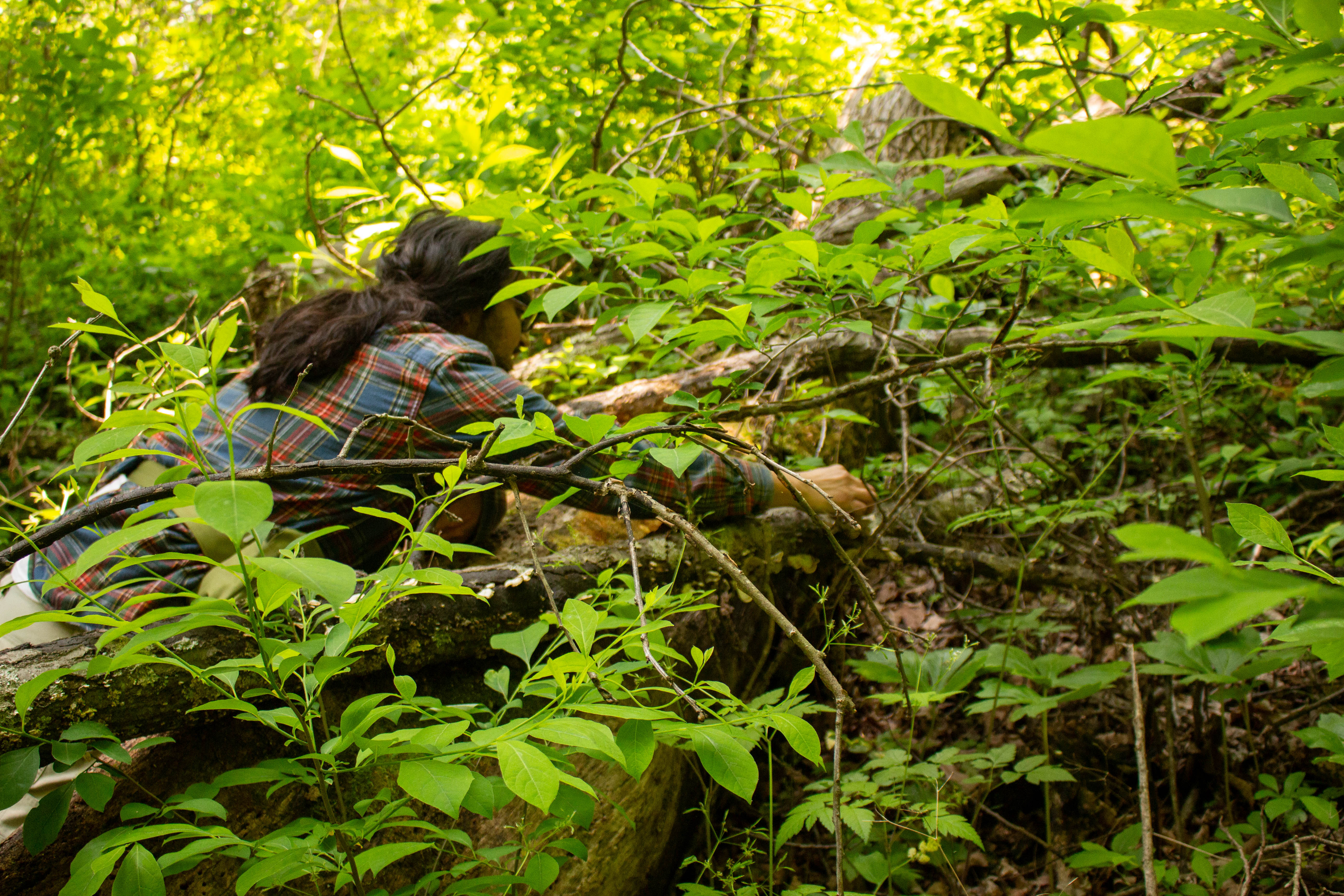
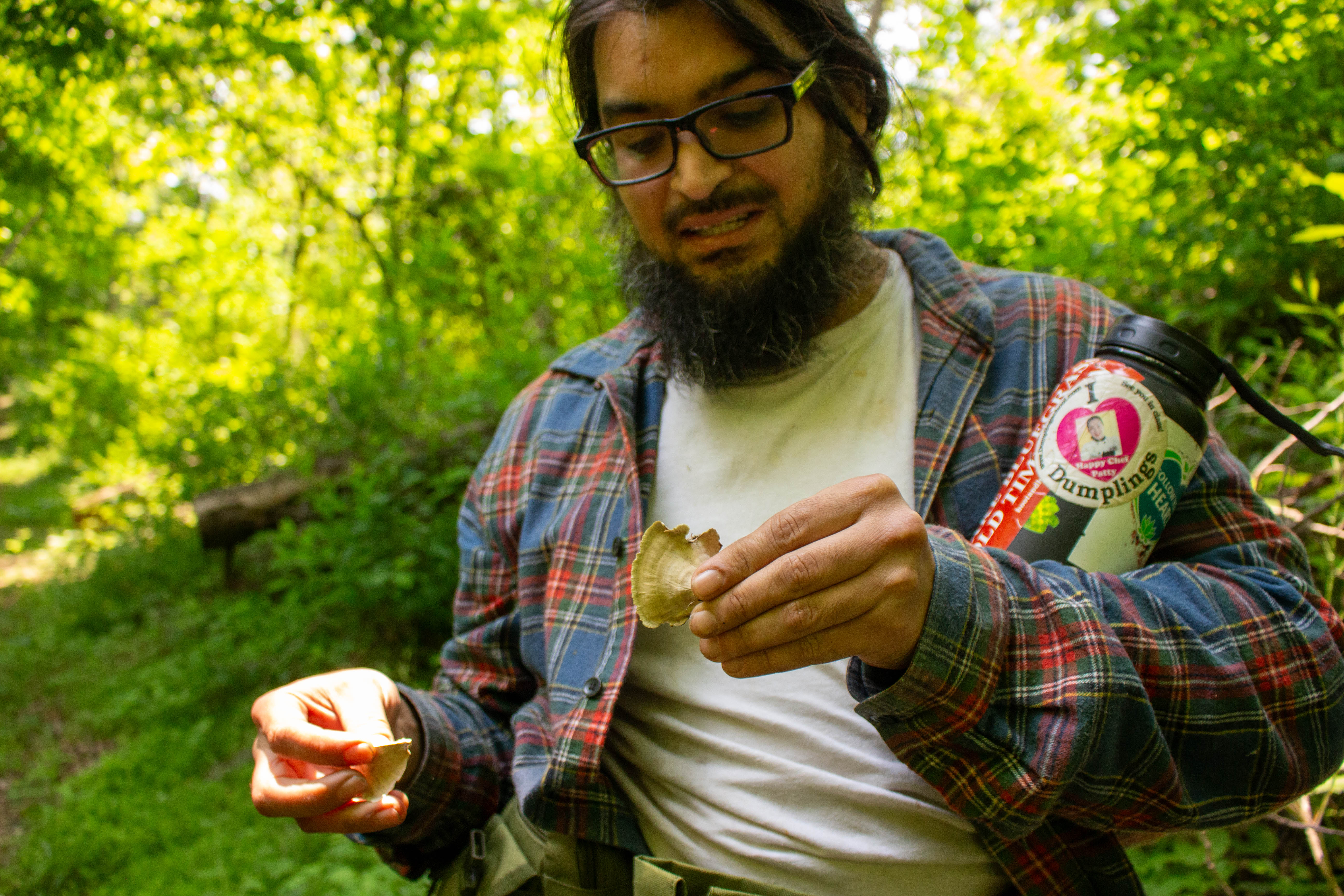
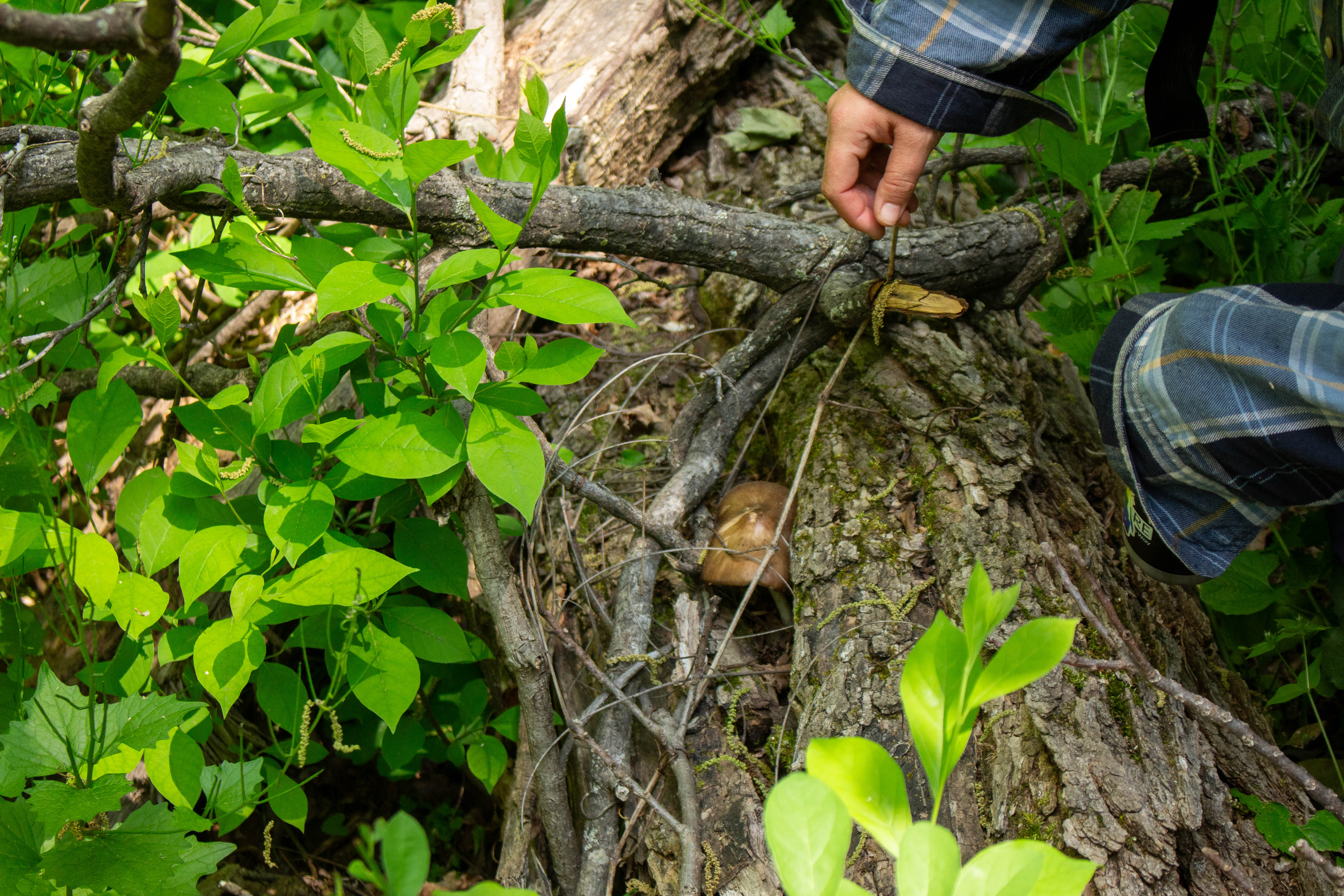

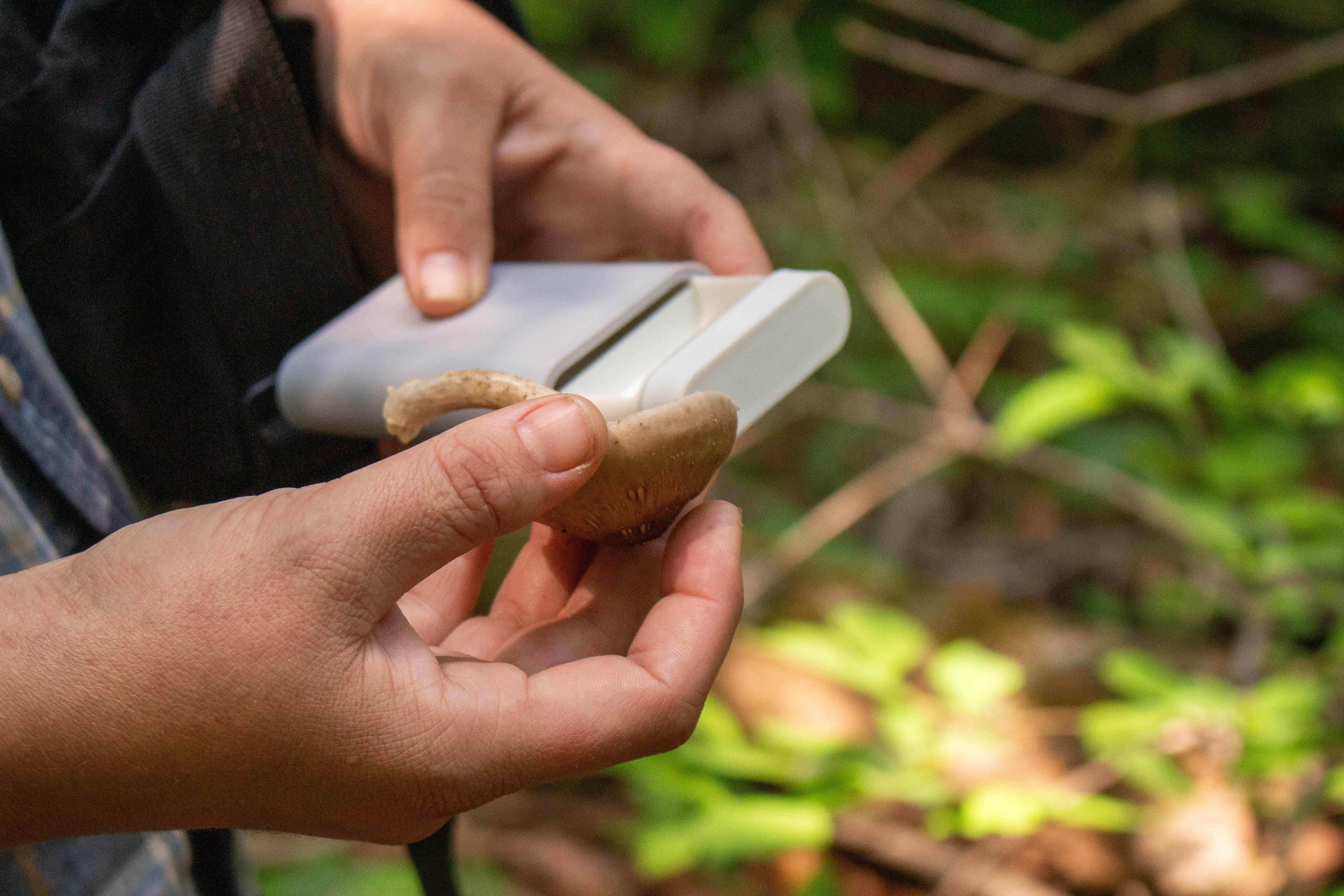
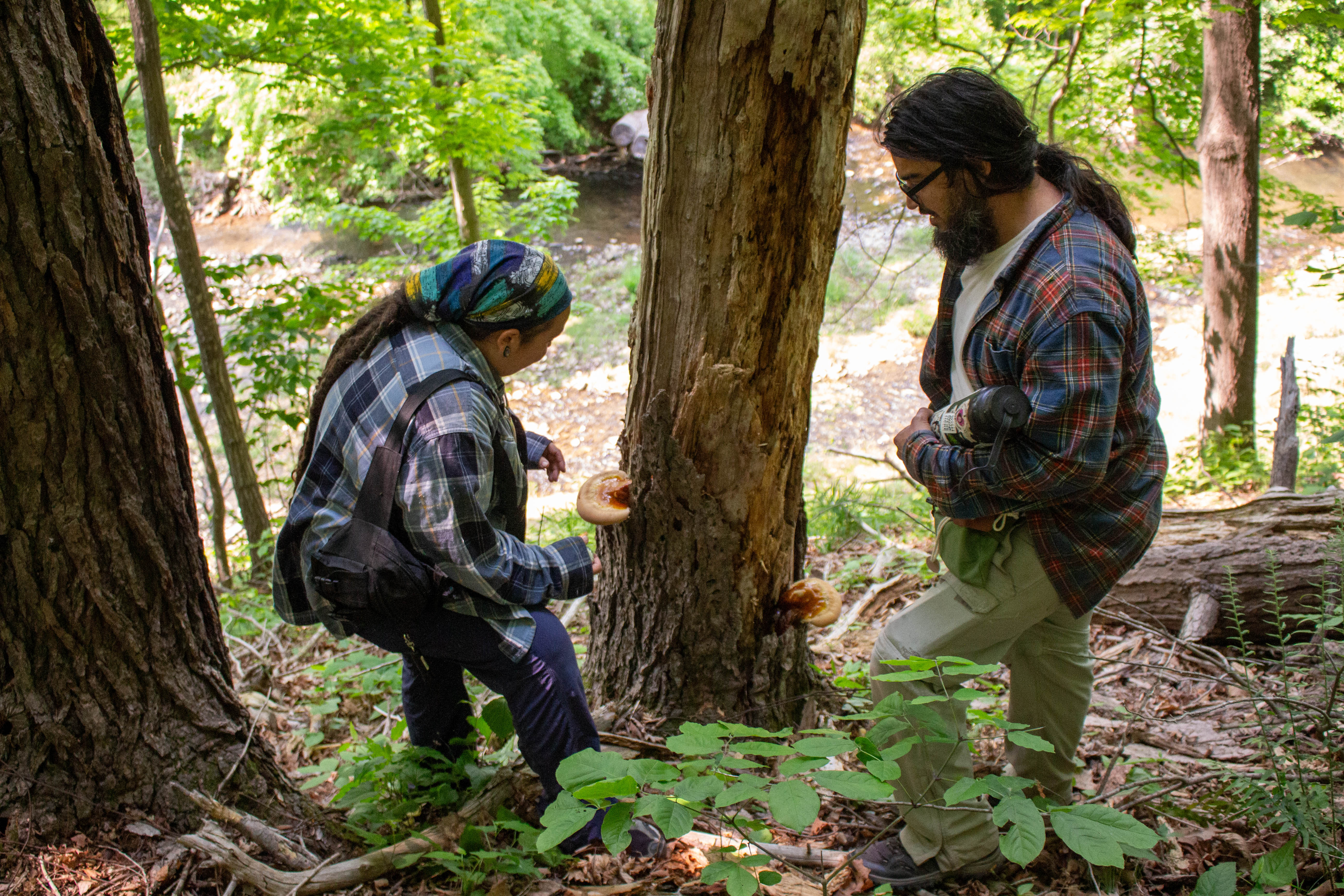
Searching for mushrooms amounts to a lot of quality time out in the woods, spent wandering, looking around, and following your hunches.
“I’ll look, and I’ll think, like, oh, wait, that looks like a mushroom, and I’ll do a double take, and that one happened to be one,” Anthony remarks, commenting on the observation and guesswork that mushroom foraging requires. “It’s definitely some luck and practice,” Sharon adds. “The foragers dilemma—is it around the next bend?”
While mushroom foraging can be “a solo practice,” it is ultimately a “community conversation,” Sharon asserts. This community is ever-evolving, as is the future of the practice. Anthony and Sharon are pleased to see more people are taking an interest in mushroom foraging in recent years, whether it’s on the trail or on social media.
“I think there’s…been a spike in more diversity in foraging in the last few years,” observes Sharon, attributing the rise, in part, to online foraging “influencers” who come from diverse backgrounds. “And then, additionally, as a queer woman, we—me and my wife who own the business—hope that we can be a positive influence in the community, to young LGBT people but also other marginalized populations that—to encourage people to pursue their dreams because you can do it. And you can do it in West Virginia. You can build a community here.”
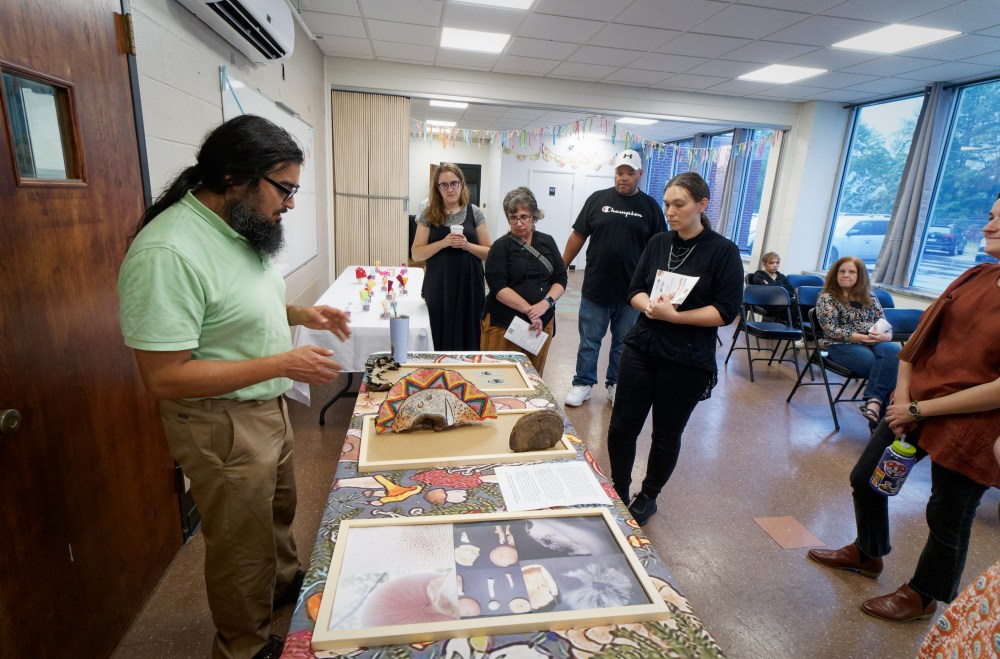
It’s crucial that new and old foragers alike harvest their findings carefully and sustainably, rather than depleting fungi populations or over-disturbing their habitats and surrounding ecosystems. Like any ethical forager knows, harvesting mushrooms that you find out in the woods means being thoughtful about how much you harvest, and how you do so. Sharon and Anthony always use sterile blades to cut mushrooms at their base.
“And when we forage, we don’t take everything that’s there,” Sharon notes, as she discusses concerns within the foraging community about over harvesting. “If you take everything that’s there all the time, it’s not going to be there forever.”
Indeed, just as Sharon has utilized the WV Folklife Apprenticeship Program to pass some of her knowledge onto Anthony, she and Anthony both care deeply about sharing their knowledge with others, and making it accessible to as many folks as possible. Foraging for mushrooms is a skillset rooted in Appalachian traditions and stories, and dedicated practitioners like Sharon Briggs and Anthony Murray take joy in being lifetime learners of its teachings. Even for practiced experts, Sharon says, “There’s always more to learn.”
About the Author
Emma Goldenthal is an educator, gardener-farmer, and aspiring community storyteller, passionate about work that showcases and fosters people’s reciprocal connections to place. Though she currently lives in the Northeast Kingdom of Vermont, a large portion of her heart resides in Wheeling, West Virginia, where she all-too-briefly served as an AmeriCorps volunteer in 2023. While living there, Emma led the creation of a self-published community cookbook featuring treasured recipes and stories from over two dozen city residents, a project funded in part by the West Virginia Humanities Council! (Thanks y’all!). Read more about the project here or here or here, and check out a free pdf of the cookbook here.
Featured interview quotes, recordings, photography, and videos are produced by the West Virginia Folklife Program.


The West Virginia Folklife Apprenticeship Program is supported by the National Endowment for the Arts and the West Virginia Humanities Council.
Read the 2022-2023 West Virginia Folklife Apprenticeship Program featured blog posts linked below:
- Fiddle Repair with Chris Haddox & Mary Linscheid, written by Mary Linscheid
- Old-Time Fiddle with Gerry Milnes & Annick Odom, written by Mary Linscheid
- Clawhammer Banjo with Joe Herrmann & Dakota Karper, written by Mary Linscheid
- Appalachian Storytelling with Bil Lepp & James Froemel, written by Adam Booth
- Mushroom Foraging with Sharon Briggs & Anthony Murray, written by Emma Goldenthal
- Soul Food Cooking with Xavier Oglesby & Brooklynn Oglesby, written by Emma Goldenthal
- Fiber Arts with Enrica McMillon & Barbara Weaner (Featured in Fall 2023 Goldenseal), written by Jennie Williams
 wvfolklife.org